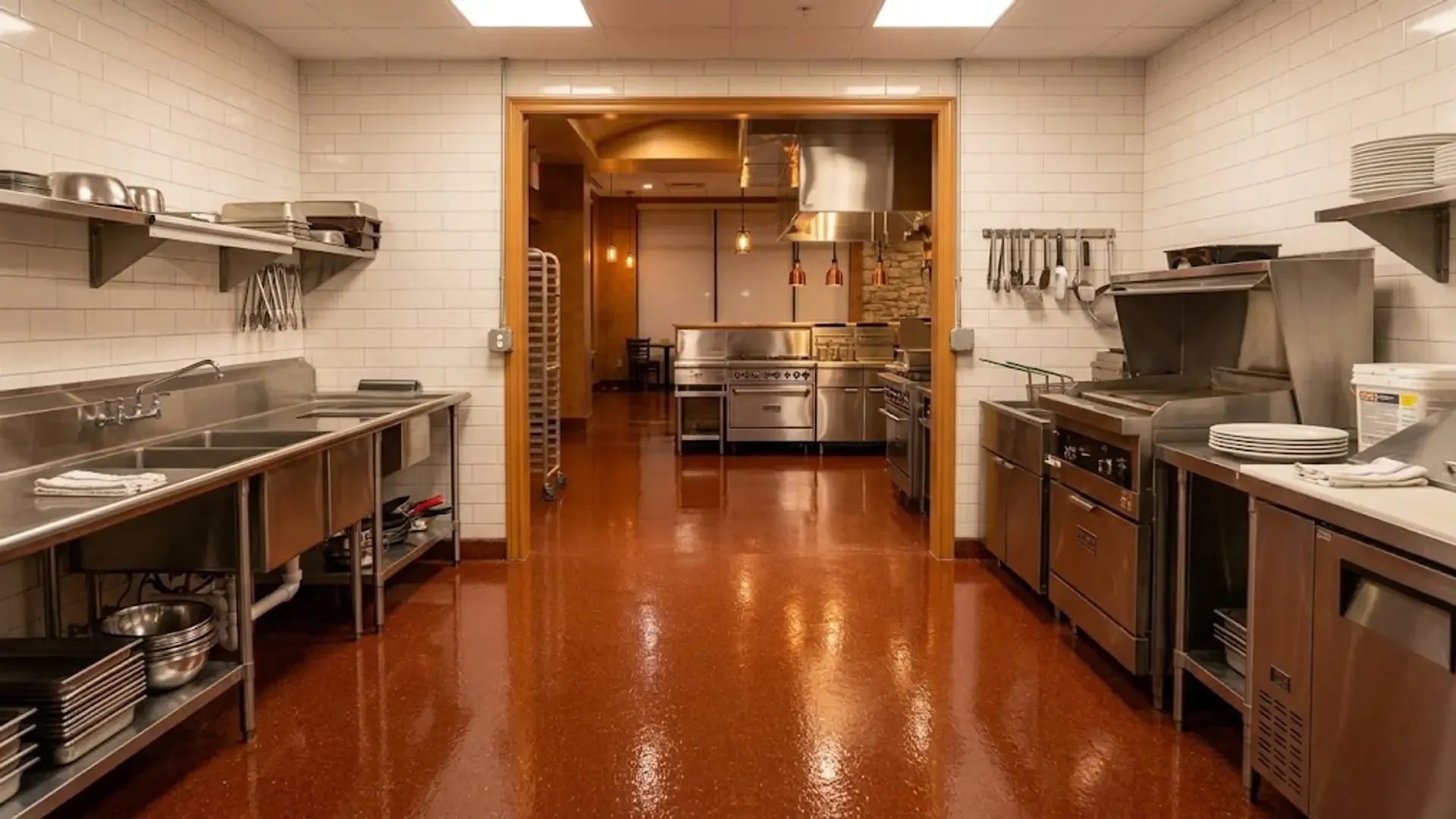
The right commercial kitchen floor is chosen zone by zone, matched to each area's washdown exposure, grease and chemical contact, temperature swings, drainage, and slab moisture. Concrete Masters installs restaurant and commercial kitchen flooring across Atlanta, where a floor has to survive hot-water washdowns, grease, and constant traffic day after day. Getting the specification right before installation saves a costly redo later.
Start With Each Zone's Exposure
Every commercial kitchen has distinct zones, and each one stresses the floor differently. Georgia's food service rules require smooth, durable, easily cleanable floors, so the wet prep line and dish station need a different specification than dry storage or the dining room.
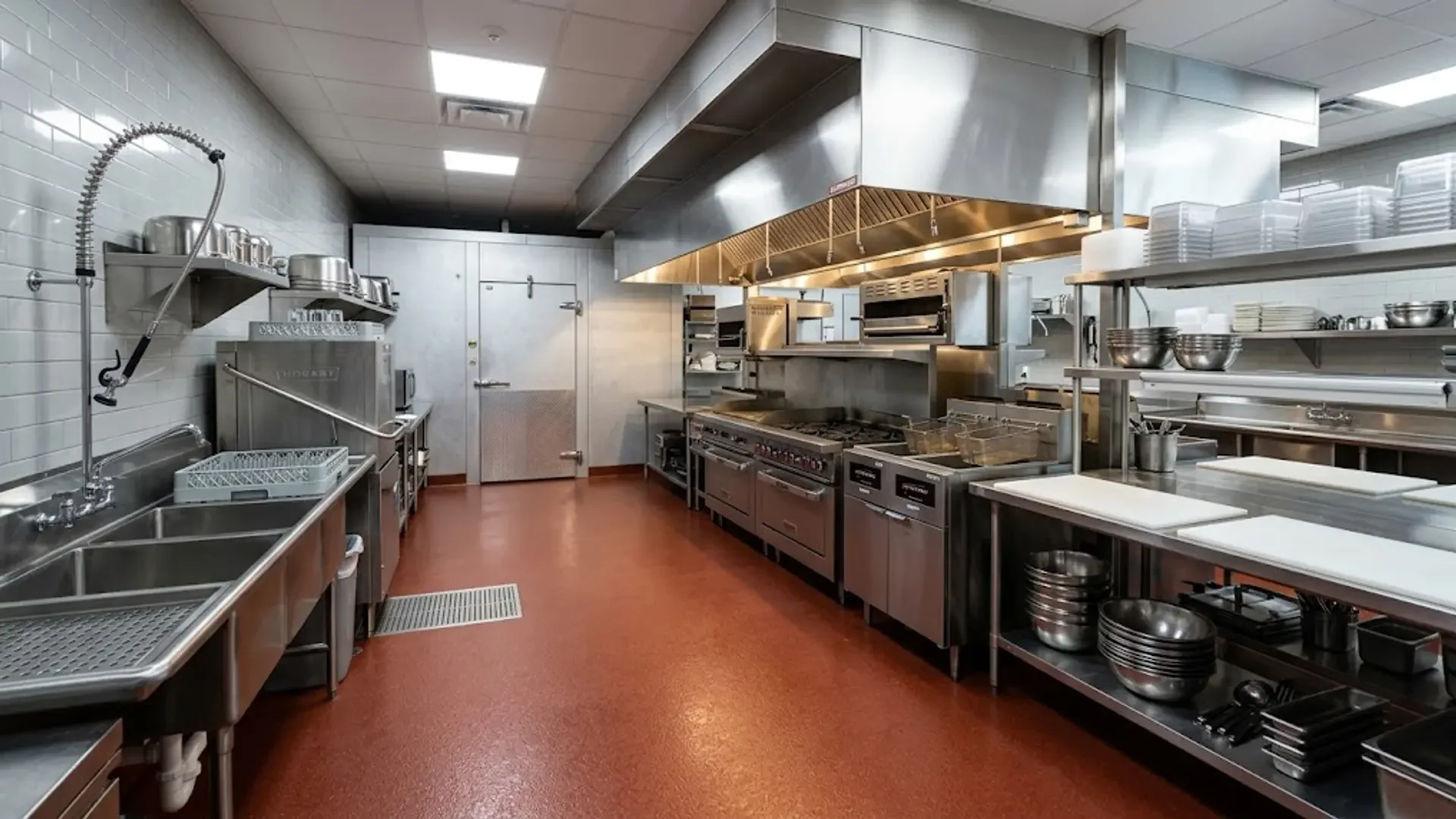
- Wet prep and dishwashing: constant water, hot-water or steam washdowns, and heavy foot traffic
- Cook line: grease splatter, thermal shock from hot equipment, and frequent degreasers
- Walk-in coolers and freezers: temperature swings and condensation
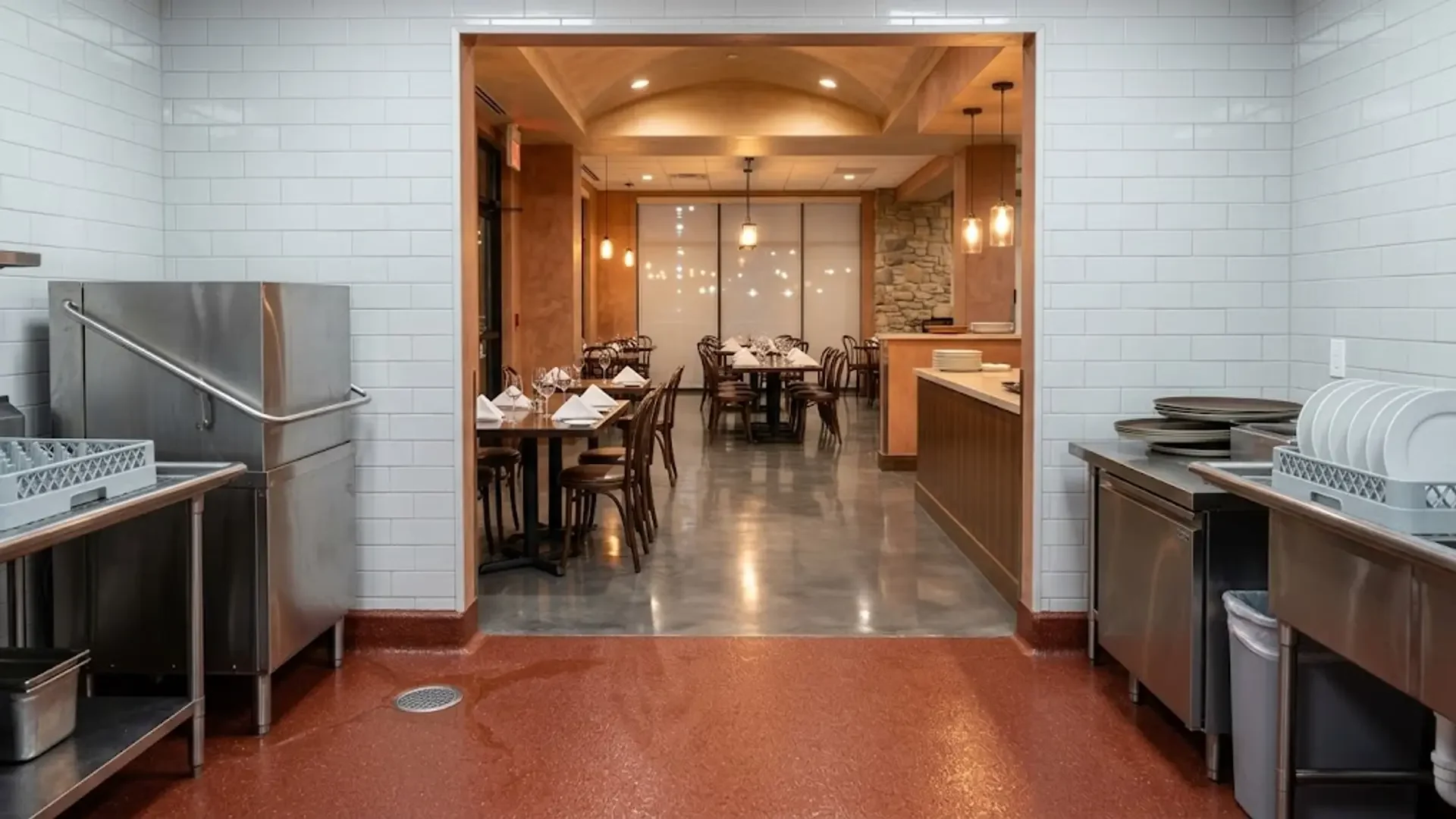
- Dining room and bar: lower moisture exposure and higher visibility, where polished or stained concrete works well
Specify each zone for the exposure it actually sees, and let the flooring decision follow from that.
Georgia Requirements That Shape the Spec
Georgia's food service construction rules set clear parameters for which systems qualify in a restaurant kitchen:
- Floors must be smooth, durable, and easily cleanable.
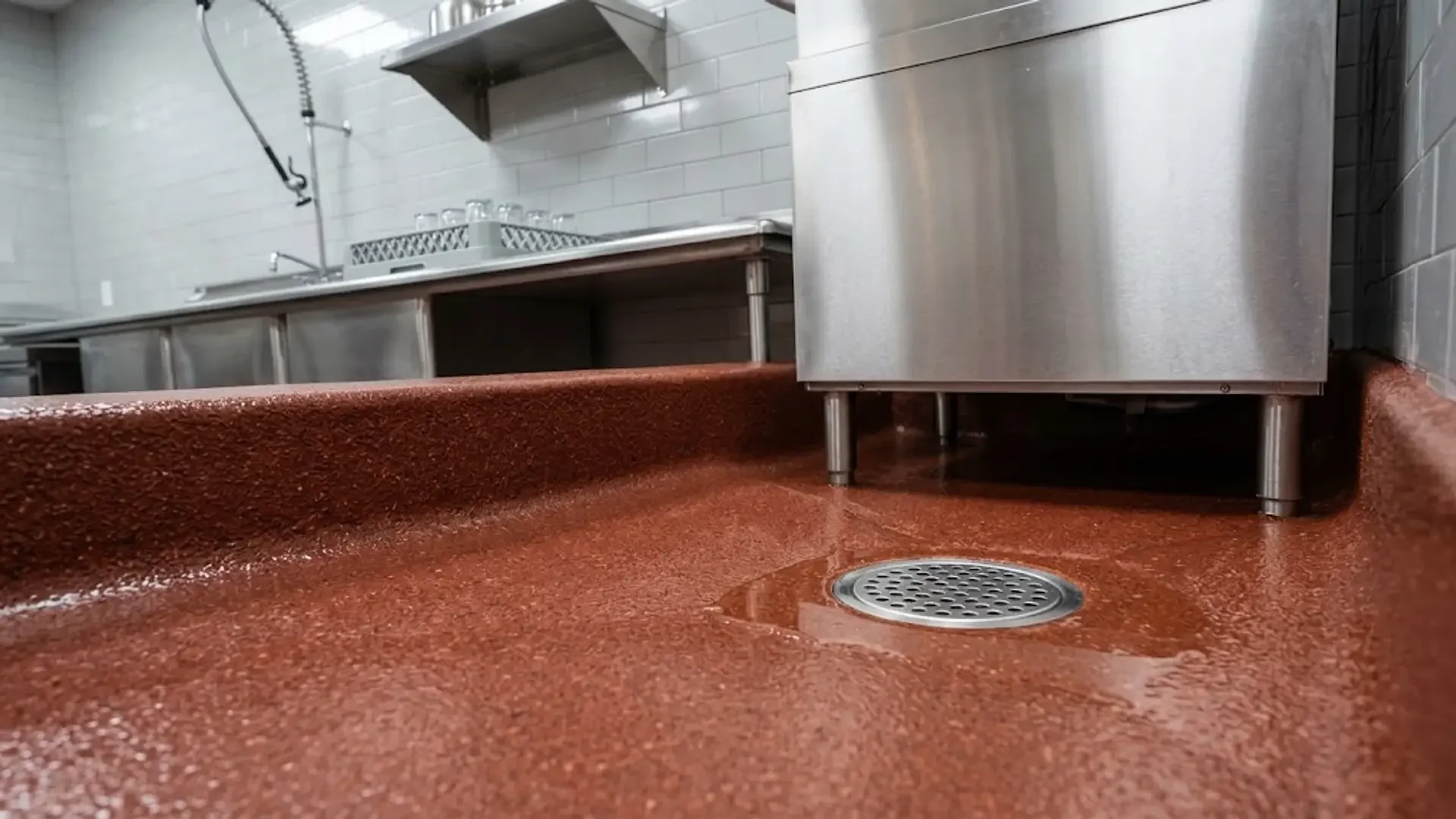
- In kitchens cleaned with water-flush methods, floors need drains, must be graded to drain, and need coved, sealed floor-to-wall junctures.
- In kitchens cleaned by other methods, floor-to-wall junctures still need to be coved and closed tight.
- Poured resin floors, such as epoxy, must be a uniform thickness of at least 1/8 inch.
- Anti-slip floor applications are allowed in wet areas for safety.
Together, these rules strike the right middle ground: a floor that is smooth enough to clean easily, yet textured where slip risks are highest. Concrete Masters installs seamless floors with a curved wall transition, eliminating the grout lines and seams where grease and food debris usually get trapped.
Matching the System to the Exposure
Concrete Masters offers several systems for kitchens and food prep areas, including quartz broadcast epoxy, standard epoxy coatings, polyaspartic coatings, antimicrobial flooring, polished concrete, and decorative staining. The right choice depends on each zone's exposure profile: hot-water or steam washdowns, grease, acidic foods, sanitizer use, foot traffic, and slip risk.
| System | Best Fit For |
|---|---|
| Quartz broadcast epoxy | Wet, high-traffic areas like prep lines and dish stations, where the textured quartz adds slip resistance and the resin handles chemicals and thermal shock |
| Antimicrobial flooring | Food prep areas that benefit from EPA-registered antimicrobial agents working between cleaning cycles |
| Epoxy or polyaspartic coatings | General back-of-house zones, storage, and corridors |
| Polished or stained concrete | Dining rooms, bars, and other customer-facing spaces with lower moisture exposure |
Front-of-house and back-of-house can use different systems. A dining room can go with polished or stained concrete for a finished look, while the kitchen behind it gets a system built for washdowns and grease.
Test the Slab First
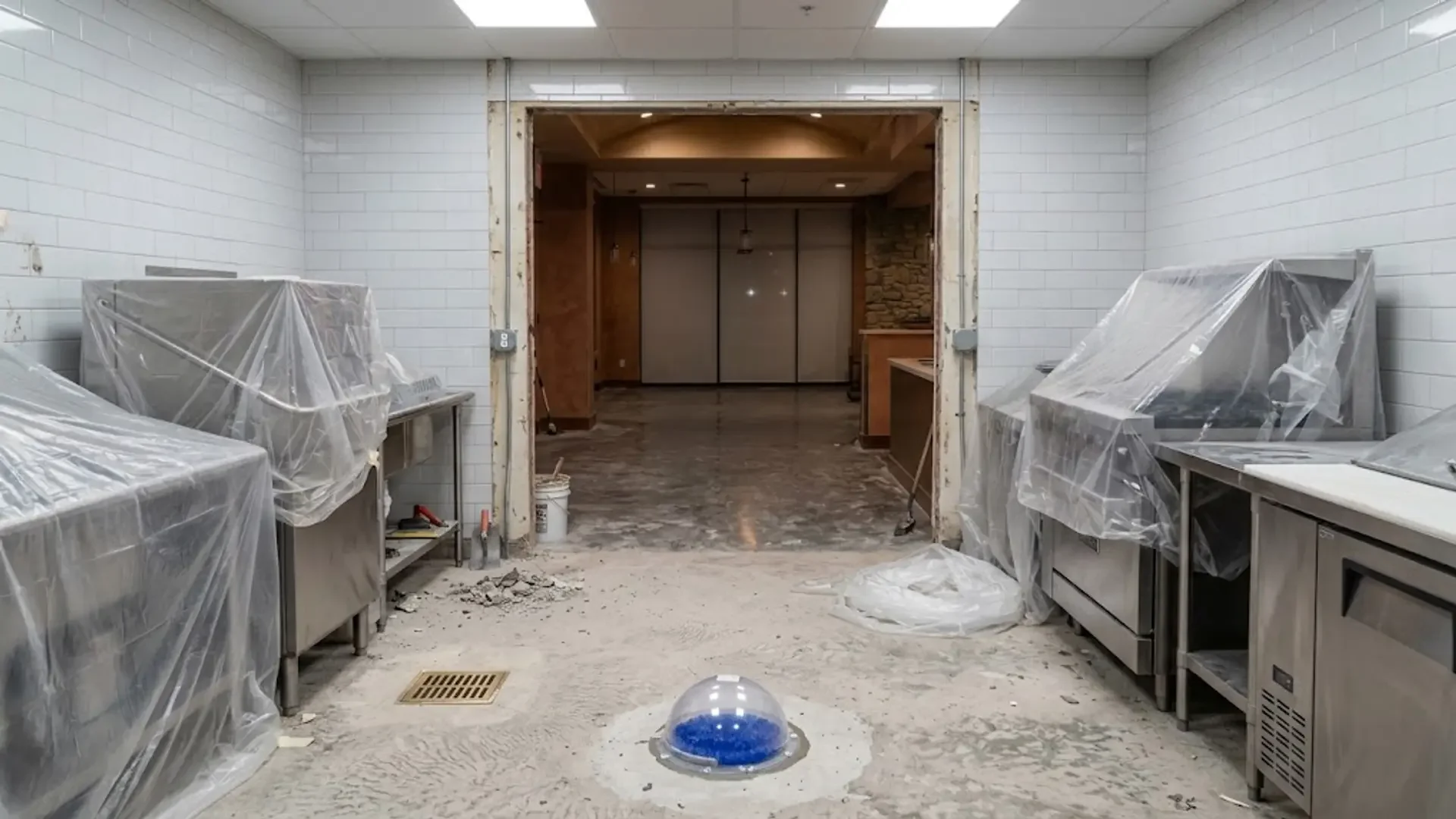
Moisture vapor trapped in a slab can cause blistering, delamination, bond failure, and efflorescence under a new floor, even when the system itself is well specified. Testing the slab before committing to a resinous system shows whether it's ready. If readings come back high, concrete vapor remediation can bring the slab within range before the finish floor goes down.
Plan Around Your Kitchen's Schedule
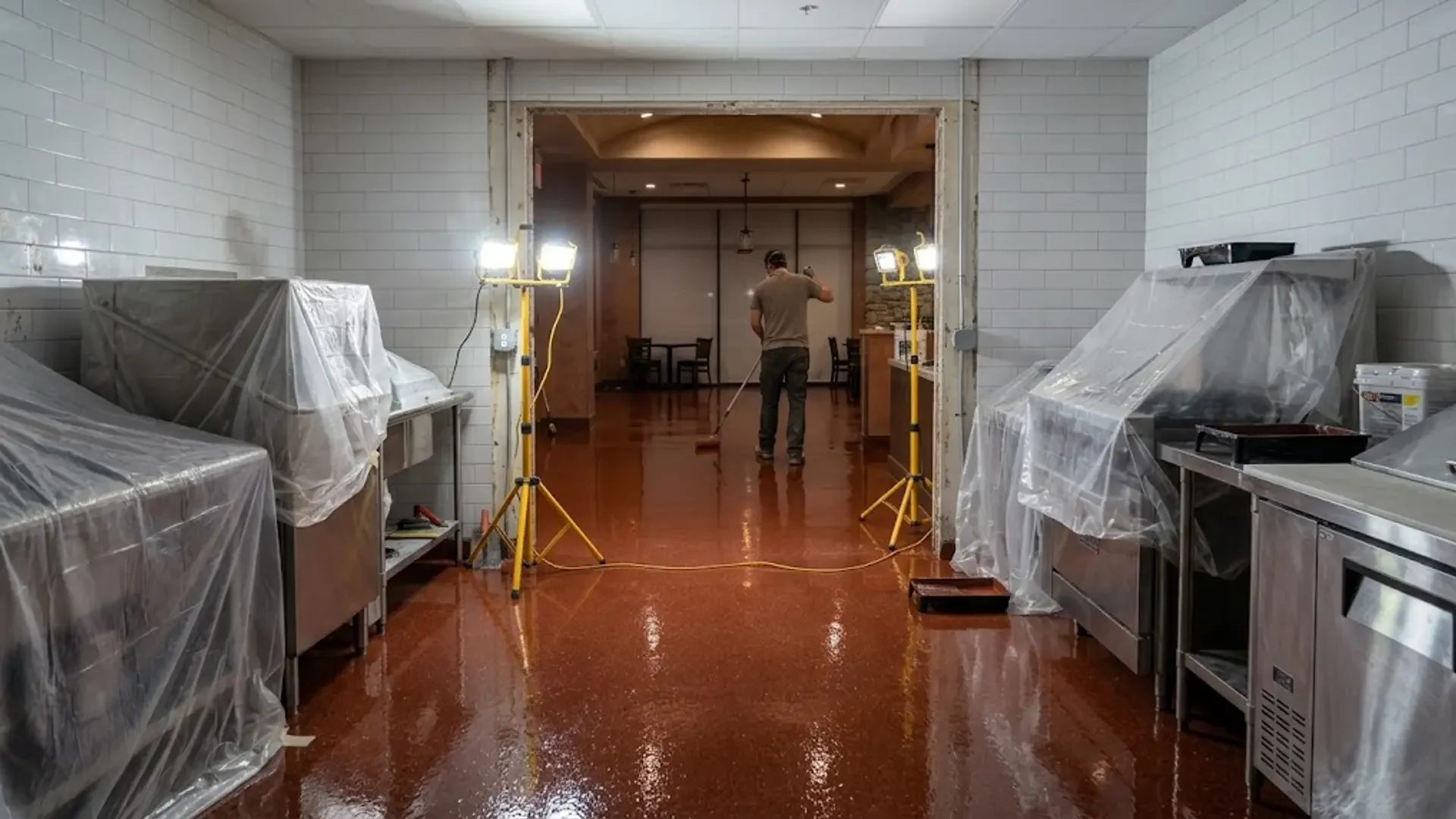
Cleaning method, drain layout, and prep scope all affect which system fits and how installation is scheduled. A kitchen that uses water-flush cleaning needs graded floors and drains designed into the plan from the start. For active restaurants, raise installation timing early. Concrete Masters uses fast-cure systems that allow weekend installation, so most restaurants can reopen on Monday.
Frequently Asked Questions
When does a restaurant kitchen need a coved base and floor drains?
A restaurant kitchen needs floor drains and a coved, sealed base wherever water-flush cleaning is used. Georgia's rules require those floors to be graded to drain, with sealed, coved floor-to-wall junctures. Kitchens cleaned by other methods still need coved, closed junctures.
How thick does a poured resin kitchen floor need to be in Georgia?
A poured resin kitchen floor in Georgia needs a uniform thickness of at least 1/8 inch. Georgia's food service construction guidance uses that thickness to make epoxy and similar poured floors equivalent to standard floor tile.
Should slab moisture be tested before installing commercial kitchen flooring?
Slab moisture should be tested before installing commercial kitchen flooring, because trapped moisture vapor can cause blistering, delamination, and bond failure under a new resinous floor. If the slab tests high, vapor remediation can be installed before the finish system.
How does a restaurant's cleaning method affect flooring selection?
A restaurant's cleaning method affects flooring selection because water-flush cleaning requires floors graded to drains with sealed, coved junctures. Dry cleaning methods have lighter drainage requirements, which opens up more system options.
Ready to Talk Through Your Kitchen Floor?
The right system for your Atlanta restaurant kitchen comes down to your zones, cleaning methods, and slab condition. Concrete Masters serves restaurants in Atlanta and across Fulton, DeKalb, Cobb, Gwinnett, and Fayette Counties. Call (404) 934-0424 to talk through which system fits your kitchen.