
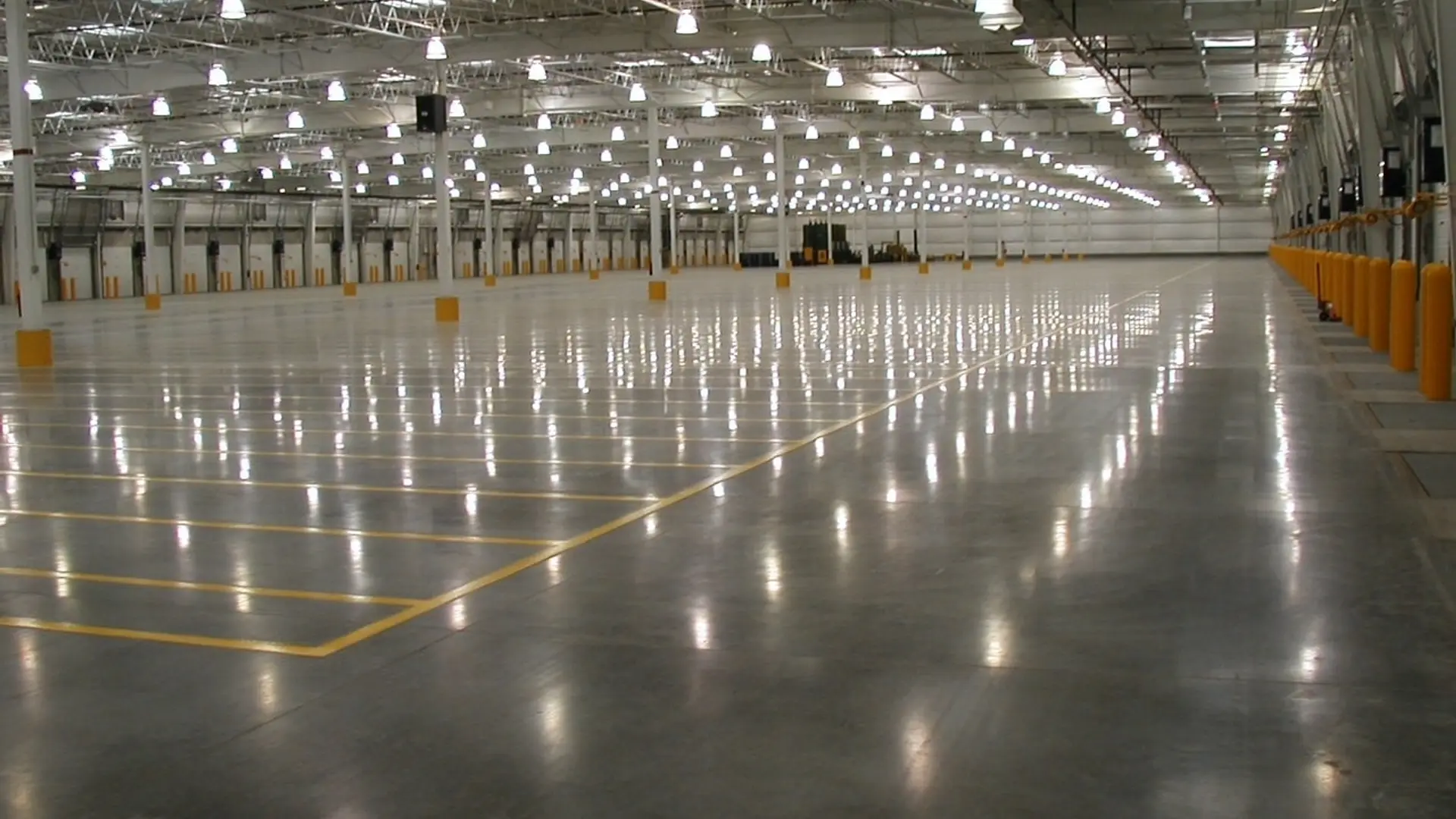
Often, yes—if there is a suitable concrete slab beneath the existing tile or carpet and its condition supports polishing. The existing covering and adhesive residues need to be addressed, and the slab underneath needs to be assessed before anyone can commit to an exposed, polished look. For commercial and industrial facilities across Atlanta, Fulton, DeKalb, Cobb, Gwinnett, and Fayette Counties, this guide walks through what that assessment involves, what can affect the final appearance, and what needs to be settled before scope, finish, and scheduling are approved.
What's Underneath Matters
Before anyone can tell you whether your slab is a good candidate for a polished, exposed finish, the existing flooring and its adhesive have to be removed. What is left behind after that removal, cracks, patch areas, old adhesive residue, or discoloration, is what determines the real scope of the project. Treat the removal step as the first real assessment point, not a formality before the real work starts.
Setting Realistic Appearance Expectations
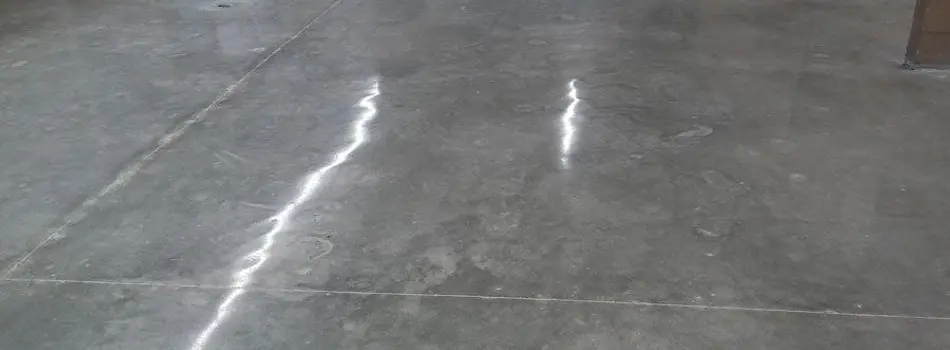
Removing the old adhesive does not guarantee a clean, unmarked slab. Ghosting from old tile patterns or adhesive can remain visible even after grinding or coloring is attempted. This is a normal outcome of working with an existing slab, not a sign that something went wrong.
A representative test area is the most useful tool for managing this. Before approving the full floor, ask to see a small section ground, cleaned, and finished the way the rest of the floor is planned. That test area should answer one question clearly: is this slab's natural condition something you are comfortable living with as a finished, visible floor? A test area sets expectations. It is not a promise that every mark will disappear.
Safety Comes Before Demolition
Older resilient flooring and the adhesive underneath it should be evaluated for asbestos before any abrasive removal begins. OSHA restricts sanding asbestos-containing flooring and limits aggressive methods for removing old mastic, and adhesive color alone is not a reliable way to identify it. An asbestos evaluation before demolition can change both the removal method and the project sequence, so it belongs early in planning rather than as an afterthought.
Grinding concrete also generates fine, respirable dust. OSHA guidance points to wet grinding methods or proper vacuum dust collection as the way to manage this. For an occupied building, it is worth asking in advance how work areas will be contained and cleaned up, rather than assuming the process will be dust-free.
Exposed Concrete or a New Wear Surface?
Once the slab is uncovered, one option is to prepare and polish the existing concrete if its condition allows. If the exposed slab is unsuitable for the desired finish, an overlay or another flooring system may be worth considering. A leveling or patching material meant to prepare a substrate for another flooring product is different from a topping specifically engineered to be ground and polished. If a polishable topping is proposed, confirm that the manufacturer approves it for use as an exposed, polished wear surface.
If the exposed slab condition is not one you want to live with, resurfacing the existing slab is worth discussing as an alternative to a fully exposed finish. Once a surface is approved for polishing, Concrete Masters offers commercial concrete polishing with a choice of sheen levels, from flat or matte up to high gloss, and a choice of aggregate exposure, from a cream finish up to full aggregate exposure. Sheen and aggregate exposure are separate decisions, so it helps to look at samples of each before settling on a final look.
What Affects Project Scope and Scheduling
Two polishing quotes with the same square footage can represent very different amounts of work. Several factors drive that difference:
- How much existing covering and adhesive has to be removed
- Whether cracks, trenches, or damaged sections need repair first
- Edge work and detailing around walls, columns, and fixtures
- Whether the space will stay occupied or in partial use during the work
- The level of aggregate exposure and finish complexity requested
If your project includes a new topping before polishing, keep in mind that early walkability on a topping is not the same as the floor being ready for polishing or for the business to reopen. Some toppings allow foot traffic within a few hours but need a longer period, sometimes a few days, before they are ready for the next step. Ask for project-specific milestones that separate when an area is walkable, when it is ready for polishing, and when the space is fully back in operation, rather than assuming one finish date covers all of it.
If the renovation uncovers a moisture concern in the slab, that is worth addressing before finish selection is finalized. Concrete vapor remediation is available for facilities where slab moisture affects the flooring decision.
Ready to See What's Under Your Floor?
Concrete Masters provides commercial concrete polishing and commercial concrete coatings for facilities across Atlanta and throughout Fulton, DeKalb, Cobb, Gwinnett, and Fayette Counties, including Sandy Springs, Roswell, Alpharetta, Marietta, Duluth, and Peachtree City. If you are weighing whether to remove tile or carpet and expose the slab underneath, we can help you assess what is there and what your options are. Call (404) 934-0424 to talk through your facility's renovation.