
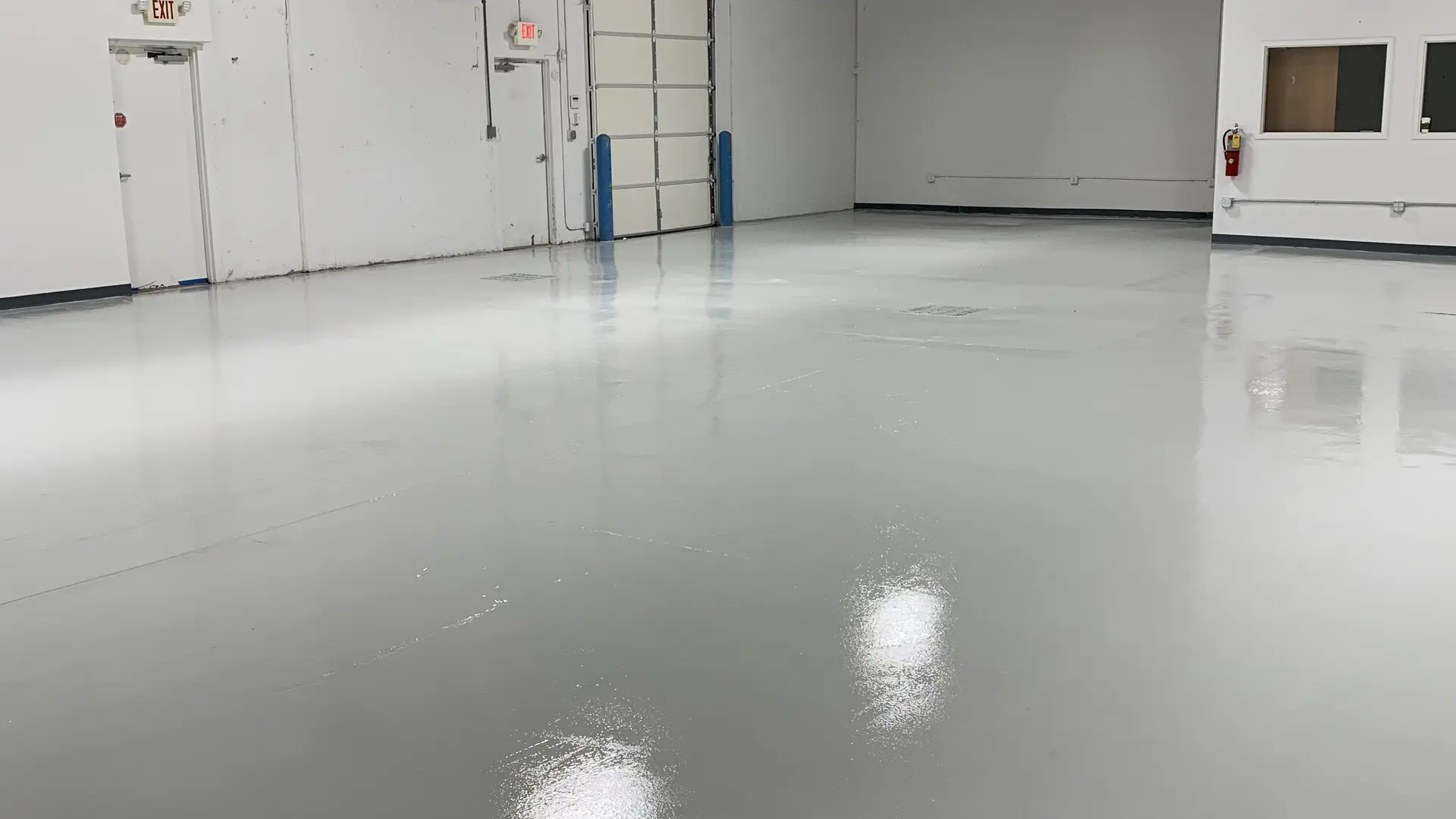
A worn commercial epoxy floor raises a practical question before it raises a budget question: does the existing system need a surface refresh, or has it reached the point where it needs to come out? The two paths lead to very different scopes of work, and the answer depends on the condition of the existing coating, not just how it looks. This guide walks facility managers in Atlanta and the surrounding counties through how to tell cosmetic wear from coating failure, what evidence should guide that decision, and the range of renewal options available once you know where your floor actually stands. Concrete Masters serves commercial and industrial facilities across Atlanta, GA, and Fulton, DeKalb, Cobb, Gwinnett, and Fayette Counties with coating, polishing, and resurfacing work.
Cosmetic Wear vs. Coating Failure: What the Difference Means for Your Floor
Surface dullness, light scuffing, and minor color fade may be cosmetic if the coating underneath remains sound. Hollow-sounding areas, peeling edges, blistering, or sections where the coating has lifted away from the slab are warning signs that the system needs closer evaluation.
The distinction matters because recoating generally makes sense only when the existing layer remains firmly bonded and can accept a compatible finish after proper preparation. Loose or delaminated material has to be removed before a new coating system can be installed over the affected area.
Concrete Masters offers commercial flooring maintenance, including topcoat renewal, minor repairs, and cleaning services for floors where the existing system can be maintained rather than fully replaced.
It is also worth separating the coating system from the slab underneath it: a worn or failing epoxy layer does not automatically mean the concrete itself needs to be replaced. In many cases, the slab is sound and only the applied system needs attention.
Evidence Before You Decide: Testing the Existing Floor
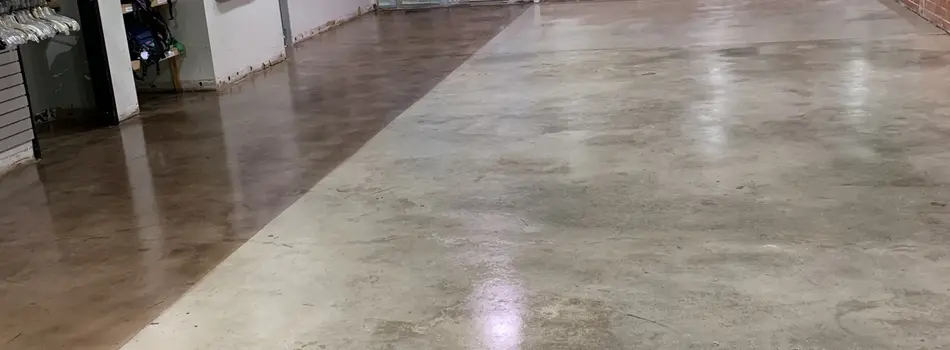
A reliable recommendation is based on inspection, not on photos or a quick walkthrough. A thorough evaluation of an existing floor may include sounding the surface for hollow areas, adhesion testing, and mapping out weak or blistered locations so the full extent of the problem is understood before a scope is set.
Where there is uncertainty about compatibility, a prepared trial application allowed to cure can help confirm whether a proposed coating will adhere to that specific existing surface, rather than guessing based on appearance alone.
Moisture inside the slab is part of that same evaluation. ASTM F2170-19a, the currently active standard, describes using in-situ probes to measure internal relative humidity at specific locations and times.
Results describe conditions at the tested spots and at the time of testing, not a blanket verdict for the whole building. That is why moisture findings from one area should not automatically be assumed to apply everywhere.
Contamination is another factor that is easy to miss: oily residue on a floor can interfere with a new coating's adhesion, produce visible defects, or contribute to premature failure, even when the surface looks clean enough to cover. A stained appearance alone does not confirm the surface is ready for overcoating.
Renewal Options: From Topcoat Refresh to Full System Replacement
Not every worn floor needs a full teardown. Depending on what the evaluation shows, the right scope can fall anywhere along this range:
- Topcoat renewal without a full strip, for floors where the existing system is sound and only the wear layer needs refreshing
- Spot repairs, for isolated areas of damage rather than the entire floor
- Deep cleaning, to address removable surface contamination and restore appearance where possible
- Anti-slip treatment renewal, where traction has worn down in high-traffic zones
- Full system replacement, when testing shows the existing coating is no longer a sound base
When a full replacement is the right call, the specification does not have to repeat what was there before.
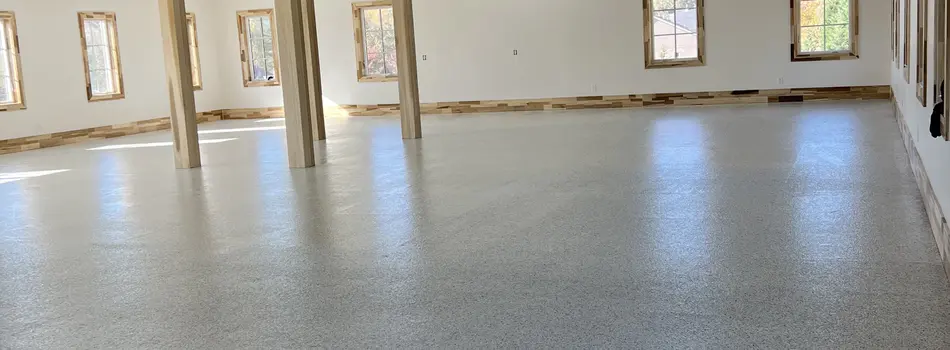
Concrete Masters offers commercial epoxy system options, along with polyaspartic coatings, broadcast flake and quartz systems, urethane cement, and moisture vapor mitigation solutions. That allows the selected flooring approach to be evaluated against the facility's actual traffic, chemical exposure, and performance needs rather than defaulting to a one-size-fits-all replacement.
If the facility's needs have shifted, it can also be worth evaluating a polished concrete finish as an alternative to a resinous coating, provided the existing slab and intended use are suitable.
Preparation and Local Conditions That Affect the Outcome
Existing resin and exposed concrete are not prepared the same way.
Where sound resin is being retained, cleaning and mechanical abrasion or deglossing may be required to create a suitable surface for a compatible new coating.
Where coating is being fully removed or the substrate is bare concrete, preparation shifts to removing unsuitable materials and profiling the concrete. The resulting surface profile should meet the specific manufacturer's requirements for the new system.
Treating light surface abrasion and full coating removal as the same scope is a common planning mistake.
Environmental conditions matter too, separately from moisture inside the slab.
Surface condensation is its own issue, and surface preparation guidance from Sika specifies maintaining the substrate temperature at least 5°F above the dew point as a safety margin during installation.
For a project in Metro Atlanta, this means confirming actual conditions on site rather than assuming humidity or soil conditions dictate the outcome.
If testing points to moisture coming from within the slab itself, that is a separate scope question worth evaluating through concrete vapor remediation before a new finish goes down.
Planning the Project: Cost Range, Scheduling, and Cure Milestones
For context on commercial epoxy installation in the Atlanta market, Concrete Masters publishes a general range of approximately $3 to $12 per square foot, depending on the system selected, preparation requirements, and finish.
That is the company's published installation range, not a fixed price for recoating or full replacement. A topcoat refresh, localized repairs, complete coating removal, and moisture remediation can involve very different costs.
When comparing estimates for a worn floor, confirm what is actually included: whether the number covers limited repairs, preparation of a retained coating, full removal, moisture-related work, and the finish itself. These are different scopes even when the quoted price per square foot looks similar.
Scheduling is also part of planning. Concrete Masters offers zone-by-zone, night, and weekend installation options for commercial projects that need to manage access during the work.
However, a phased schedule still needs to account for preparation, curing, access restrictions, and the specific areas being worked on. It should not be assumed to provide uninterrupted use of every part of the facility.
It is also worth understanding that a coating reaching foot-traffic readiness, light-traffic readiness, and full cure are different milestones, and temperature affects each one.
As one manufacturer example, Sikafloor-217, a two-component epoxy product, lists approximately eight hours to foot traffic, two days to light traffic, and seven days to full cure at 68°F.
Those figures illustrate why finishing an installation is not the same as releasing the floor for full operations. They are product-specific examples, not guaranteed cure times for a Concrete Masters project.
The actual reopening schedule should be confirmed for the selected system, site temperatures, traffic loads, and operational requirements.
Ready to Have Your Floor Evaluated?
If your commercial or industrial floor is showing wear, the first step is finding out whether you are looking at a cosmetic issue or a coating that has reached the end of its service life.
Concrete Masters works with facility managers across Atlanta, GA, and Fulton, DeKalb, Cobb, Gwinnett, and Fayette Counties to evaluate existing epoxy floors and recommend a scope that matches the condition of the coating and underlying concrete.
Call (404) 934-0424 to talk through your facility's floor and get a recommendation based on its actual condition.