
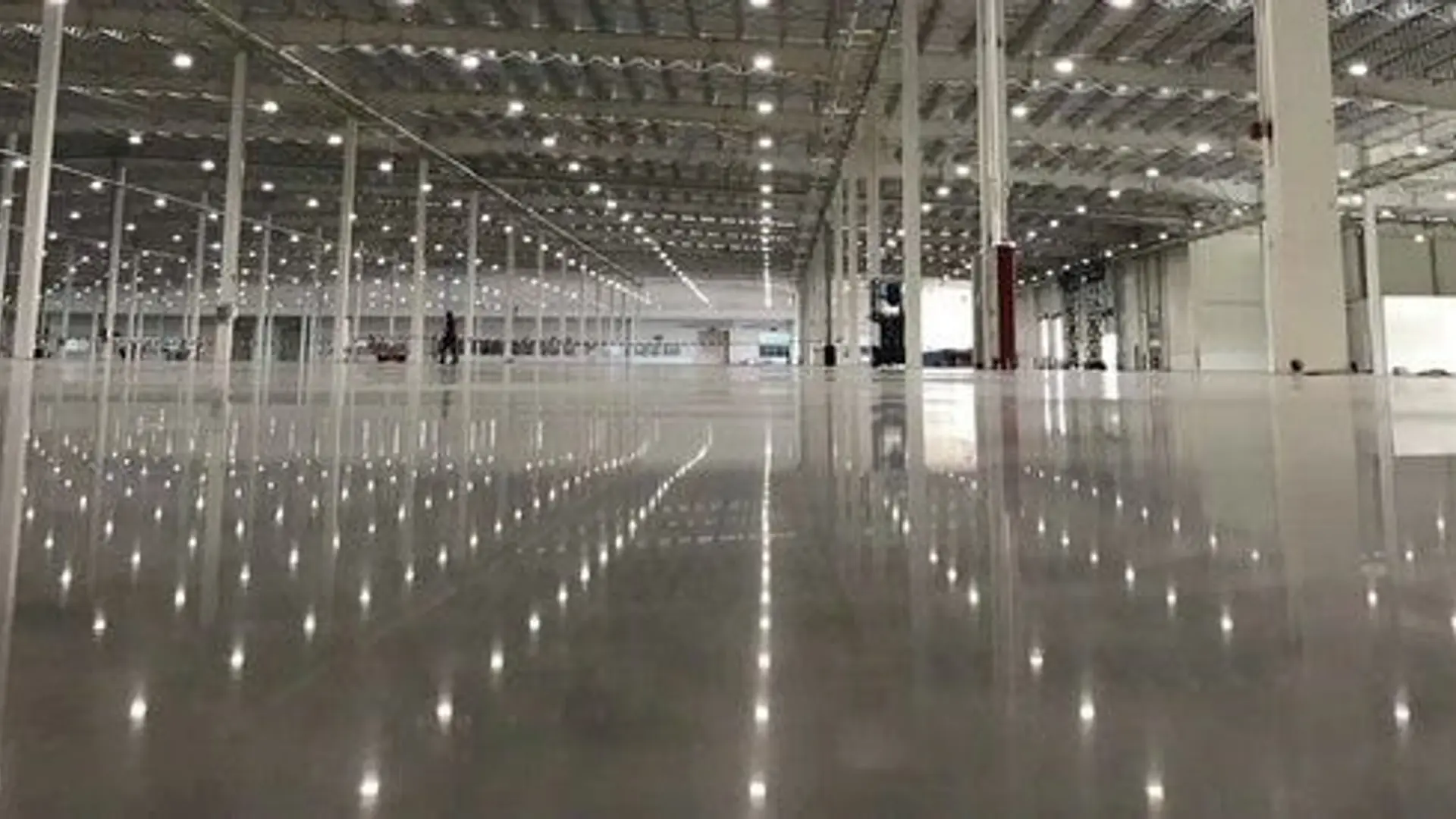
If sweeping your warehouse floor leaves a fine gray film on your boots, pallets, and inventory within hours, you may be dealing with concrete dusting rather than just ordinary dirt. Dusting happens when a thin, weak layer at the surface of the slab breaks down under rolling and foot traffic. The good news is that once you understand why it is happening, there is a clear path to deciding what kind of repair or finish actually solves it. This guide covers the common causes, how to judge severity, and the commercial flooring options available for warehouses and industrial facilities across Atlanta and the surrounding counties.
What's Actually Causing the Powder on Your Floor
Concrete dusting is often a symptom of problems that happened when the slab was finished and cured, even if the weakness becomes noticeable much later under traffic.
According to the National Ready Mixed Concrete Association (NRMCA), the most common contributors include bleed water worked into the surface during finishing and inadequate curing after the pour.
NRMCA's CIP 1 guidance also points to a couple of less obvious causes worth ruling out:
- Water or dry cement added to the surface during finishing to speed up the work
- Carbonation caused by exhaust from unvented gas-fired heaters or gasoline-powered equipment used in enclosed spaces while the concrete was fresh
None of these causes are necessarily tied to a building's age. A newer warehouse can dust just as easily as an older one if the original finishing or curing process left a weak surface layer behind.
Dusting vs. Dirt: Why the Distinction Matters
Before any repair is planned, it helps to know what you are actually dealing with.
Ordinary dirt or residue from a worn sealer can sometimes be removed through cleaning, while true concrete dusting occurs when weak material continues to break away from the slab surface itself. If fine powder repeatedly returns after cleaning, that is a reason to evaluate the concrete rather than assuming the problem is only housekeeping.
The severity of that weak layer is what determines the right fix.
NRMCA notes that chemical hardeners, or densifiers, can reduce dusting in milder cases by reacting with the concrete to improve surface hardness.
However, a densifier cannot reliably correct deeply deteriorated concrete on its own. The condition and strength of the remaining surface must be evaluated before selecting a treatment.
In more severe cases, weak concrete may need to be mechanically removed down to durable material before a new topping or finish can be installed. Treating a severely deteriorated surface with a simple hardener without addressing the underlying weakness can lead to continued problems.
Matching the Fix to the Condition of Your Slab
Once severity is assessed, the path generally falls into one of two categories for a commercial or industrial floor.
Polishing the Existing Slab
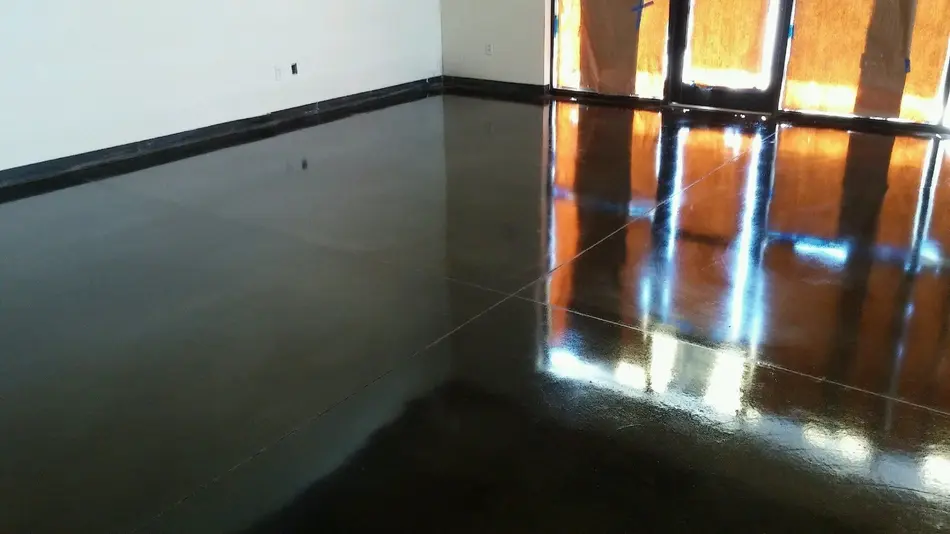
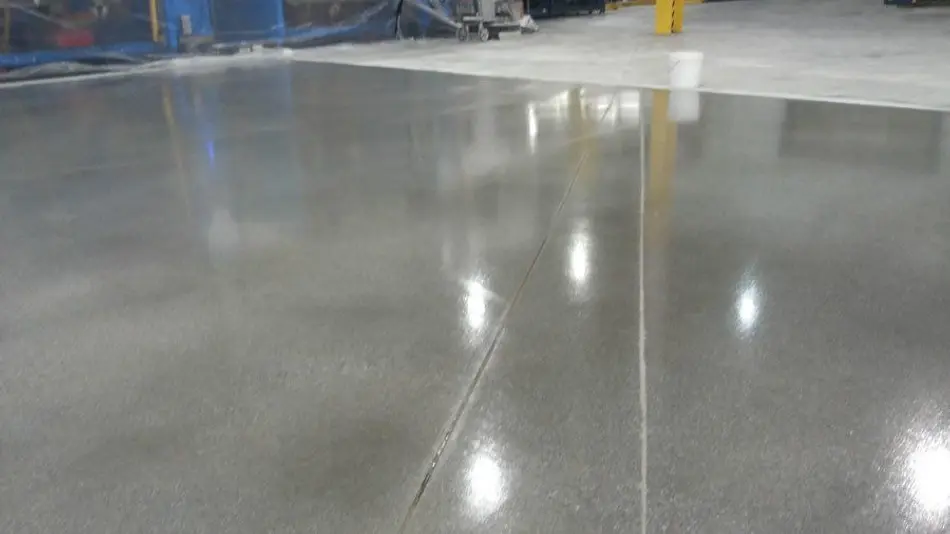
When the concrete underneath is sound, polishing can turn the existing floor into the finished wear surface.
Our commercial concrete polishing process uses progressive diamond tooling with Lavina and Kutrite systems, followed by a liquid densifier that reacts with calcium hydroxide in the slab.
The existing concrete becomes the finished surface, which is often a practical option for a warehouse that wants to keep its slab in service.
Coating Over a Properly Prepared Surface
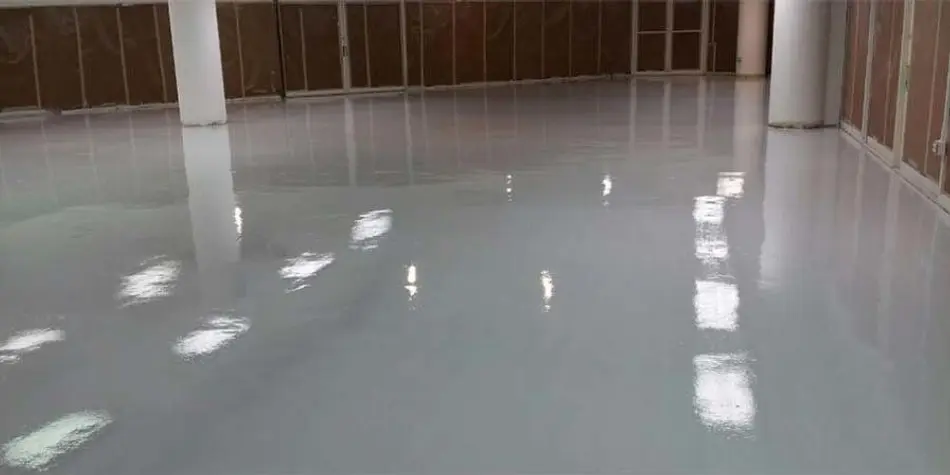
When more protection, color, or chemical resistance is needed, a resinous coating system is the other common path, and preparation matters as much as the coating itself.
Sika's surface preparation guidance is clear that resinous flooring requires sound concrete, removal of any weak material and contaminants, and proper mechanical preparation.
Coating over a dusty, deteriorated surface without addressing it first leaves the underlying problem unresolved, no matter how good the topcoat looks on day one.
Our commercial concrete coatings work includes manufacturer-certified crews, mechanical preparation, and ASTM F1869/F2170 moisture testing, with mitigation included in the proposed scope when testing indicates it is needed.
More detail is available on our commercial epoxy flooring page.
If moisture is a factor in your facility, it is worth having that assessed separately before a coating decision is finalized. Our concrete vapor remediation page covers how we evaluate slab moisture ahead of a coating project.
What Affects Scope, Cost, and Timing
Every warehouse floor is different, so an accurate quote depends on a few factors rather than a flat per-square-foot number:
| Factor | Why It Matters |
|---|---|
| Treated area and aggregate exposure | Larger floors and decorative aggregate finishes affect polishing pricing. Concrete Masters publishes a general polishing range of $1 to $8 per square foot. |
| Coating system, prep, and finish | Concrete Masters publishes a commercial epoxy coating range of $3 to $12 per square foot, depending on the selected system and preparation required. |
| Depth of weak material | How much concrete needs to be removed before a topping or finish is applied. |
| Access and operating schedule | Whether work can happen zone-by-zone, overnight, or on weekends around your operations. |
These are Concrete Masters' published service ranges, not fixed quotes for dusting remediation. Actual pricing depends on the condition of the existing slab and the selected repair or flooring system.
A proposal for your facility should document the affected areas, the condition found once weak material is removed, and the access plan, including how pedestrian paths and forklift lanes will be reopened.
Managing Dust in the Meantime
While you plan a permanent fix, be mindful of how the floor is cleaned.
OSHA's general industry standard for respirable crystalline silica restricts dry sweeping or brushing where those methods could contribute to employee silica exposure, unless safer alternatives are not feasible. The standard also restricts using compressed air to clean surfaces under similar exposure conditions, subject to specific exceptions.
Visible dust alone does not establish whether your facility exceeds OSHA's occupational exposure limits. However, recurring concrete dust is a reason to consider the potential for worker exposure and whether an appropriate exposure assessment is needed.
Where applicable, favor wet cleaning methods or HEPA-filtered vacuuming over dry sweeping or blowing dust into the air, while following the facility's safety procedures and relevant OSHA requirements.
Planning a Proposal That Actually Fits Your Floor
Before committing to a fix, ask for a proposal that spells out:
- Which areas were assessed and what condition was found
- How much, if any, weak concrete needs to be removed
- Which finish, polished or coated, fits the condition and use of the space
- How dust will be contained during the work
- How access will be managed for pedestrians and loaded forklifts, and when each can return
A proposal built around these points gives you something you can actually compare, rather than a single number that may not reflect the real scope of your floor.
Get a Floor Assessment for Your Atlanta Facility
Concrete Masters provides commercial concrete polishing and commercial concrete coatings for warehouses and industrial facilities across Atlanta and throughout Fulton, DeKalb, Cobb, Gwinnett, and Fayette Counties.
If your floor is dusting and you want a clear read on what is causing it and what it will take to fix it, call us at (404) 934-0424 to schedule an assessment.