
Moisture testing a commercial concrete floor tells you whether a slab can accept a specific coating or flooring system within that manufacturer's published moisture limits. That answer determines whether a new floor stays bonded or starts blistering a few months after installation.
Concrete Masters tests every slab before recommending a commercial epoxy floor coating or other finish system for facilities across Atlanta. It verifies moisture levels again after any mitigation work, before the finish flooring is applied.
Two Moisture Questions, Two Different Tests
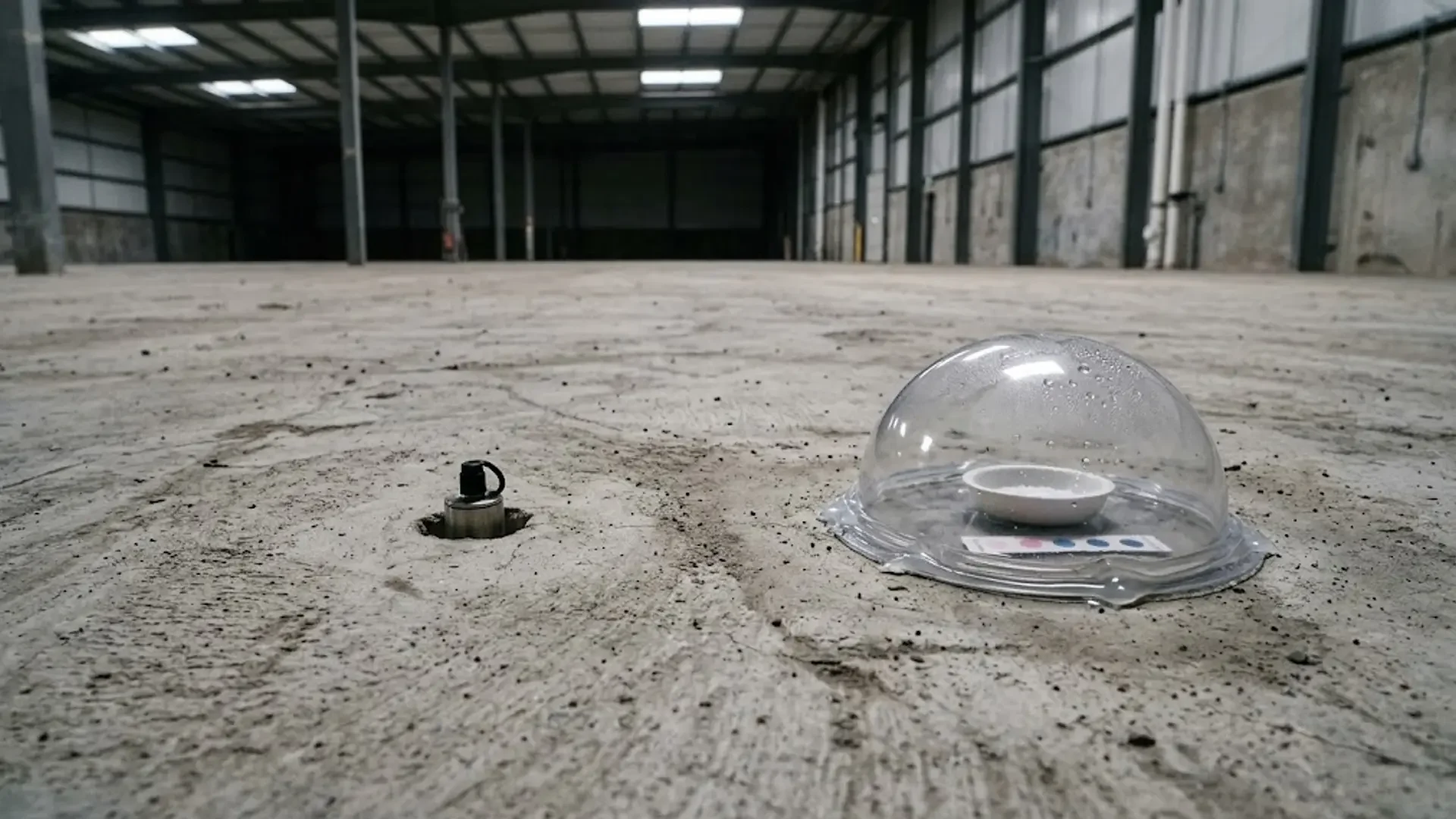
Two ASTM methods measure moisture in a concrete slab. Each answers a different question:
- ASTM F2170 (relative humidity probes): Probes are placed inside the slab to measure its internal relative humidity. For a slab drying from one side, the probe sits at 40% of the slab's thickness.
- ASTM F1869 (calcium chloride): A test kit sealed to the surface measures the moisture vapor emission rate, reported in pounds per 1,000 square feet over 24 hours.
F2170 shows how much moisture is held inside the slab, and F1869 shows how much is leaving through the surface. A testing plan may call for one method or both, depending on what the flooring or coating manufacturer requires for its system.
Why Timing Matters as Much as the Test
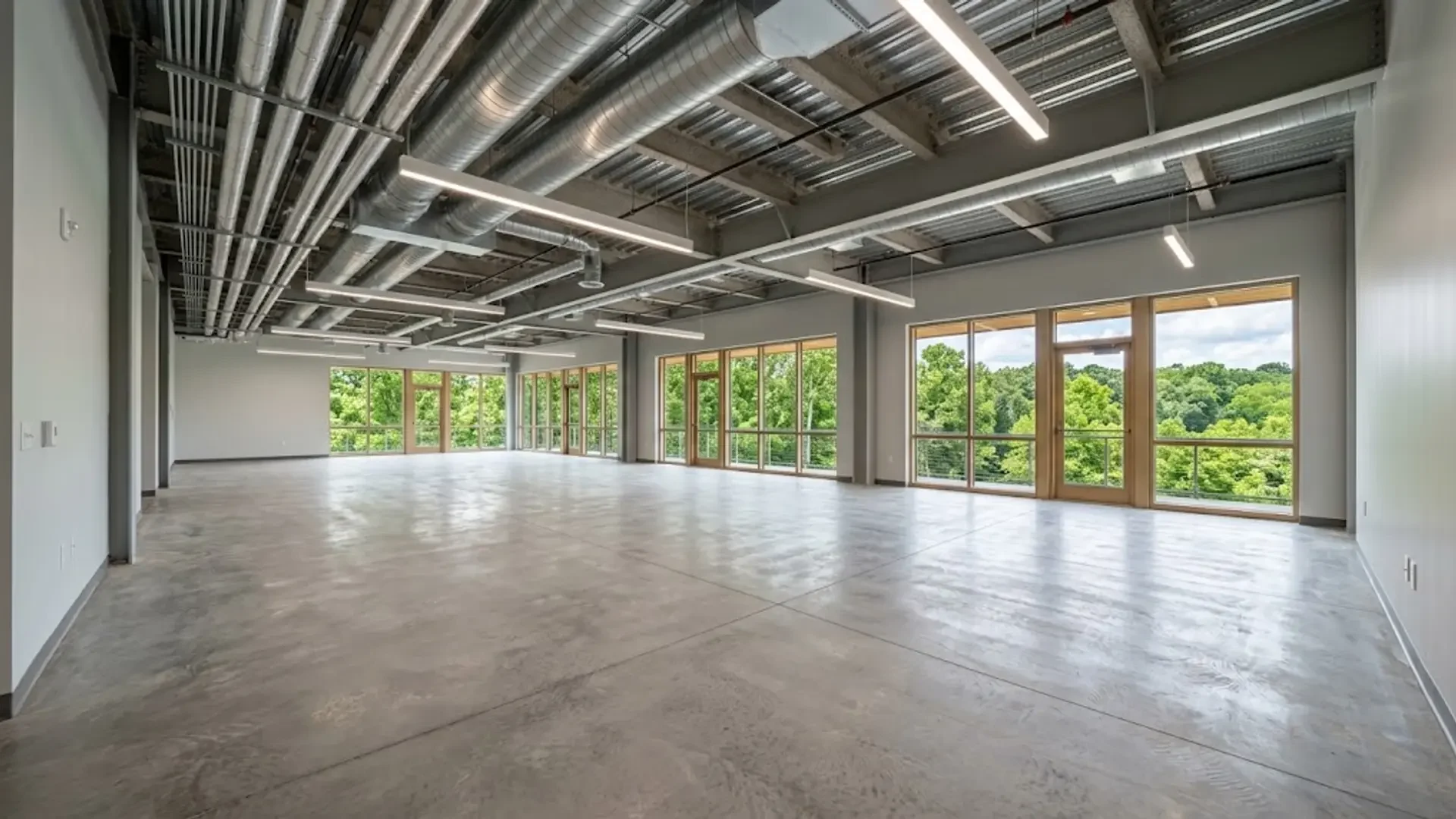
Both ASTM methods are meant to be run once the building is conditioned to its expected service temperature and humidity, with the HVAC system running the way it will during daily operations. Readings taken earlier, while the space is still open or unconditioned, can misrepresent the environment the new floor will face long term. For a facility scheduling a new epoxy system or polished concrete floor, testing belongs late in the construction timeline, once conditions match how the building will run.
Why There's No Universal Pass/Fail Number
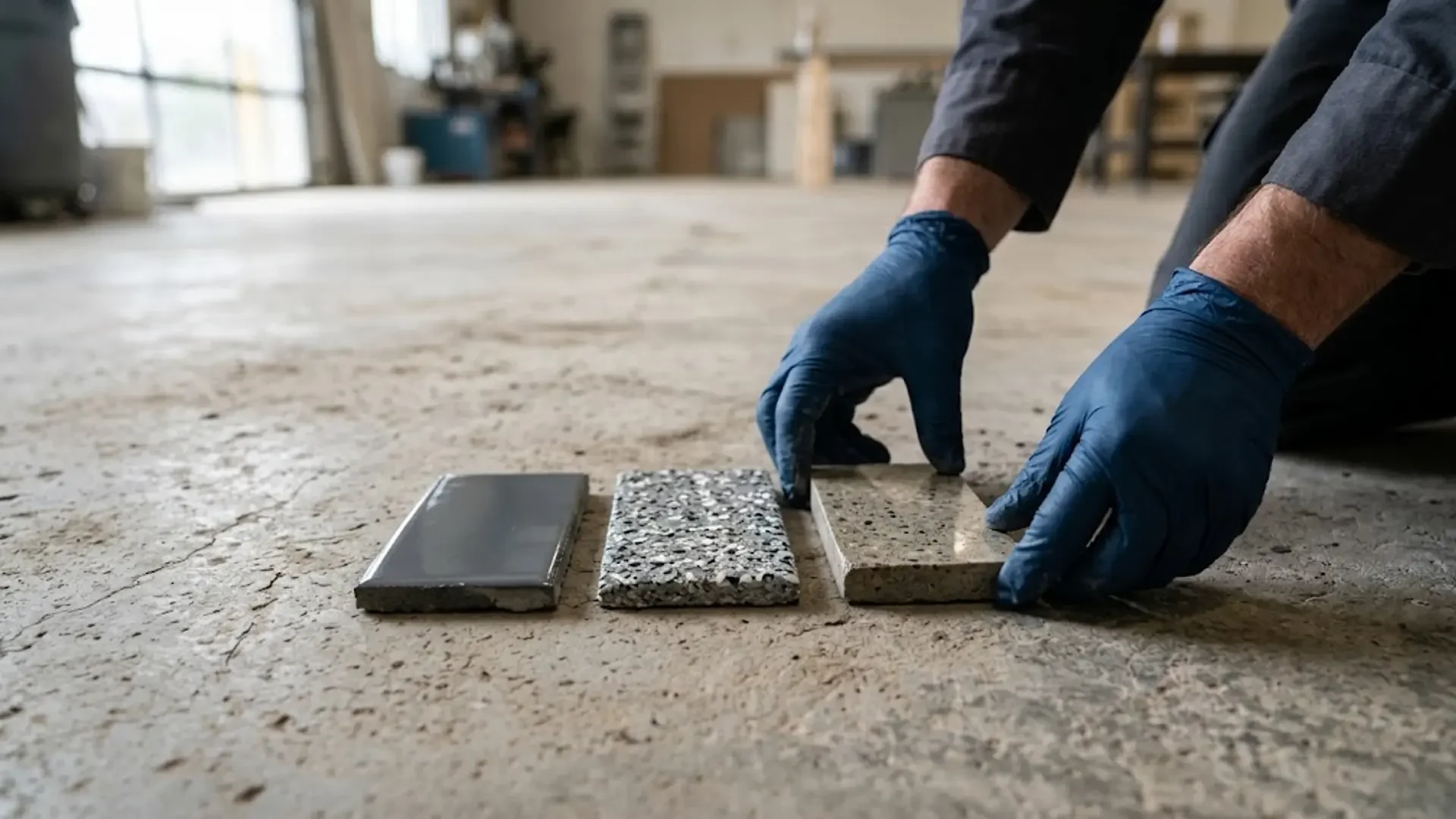
Moisture results are measured against the published limits of the specific coating, flooring, adhesive, or mitigation product being installed. A calcium chloride reading or relative humidity percentage that works for one coating system can exceed the tolerance of another. For that reason, test results should be reviewed alongside the actual finish system under consideration, whether that's a commercial epoxy coating, a polyaspartic system, or polished concrete.
What Happens When Moisture Gets Overlooked
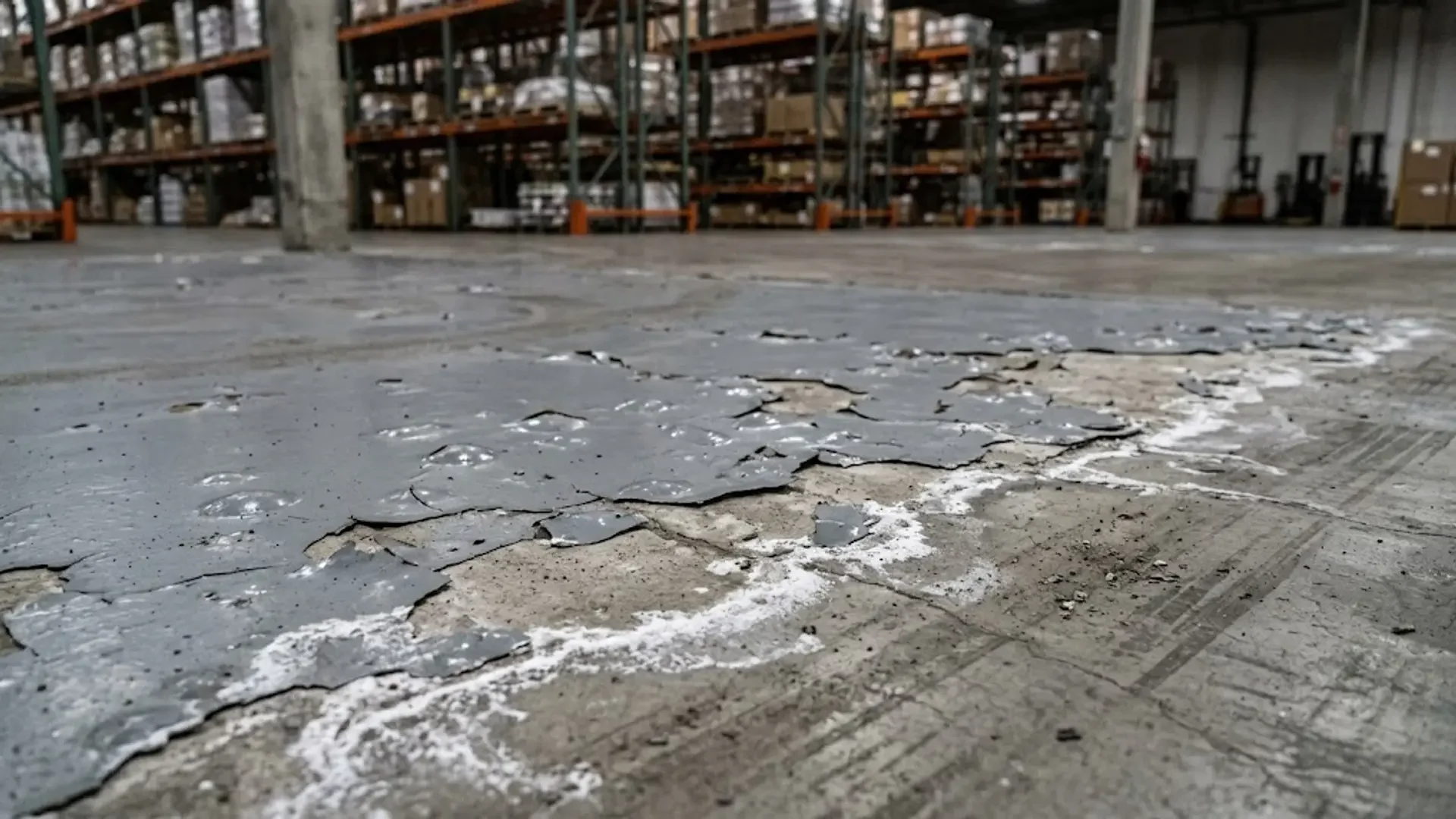
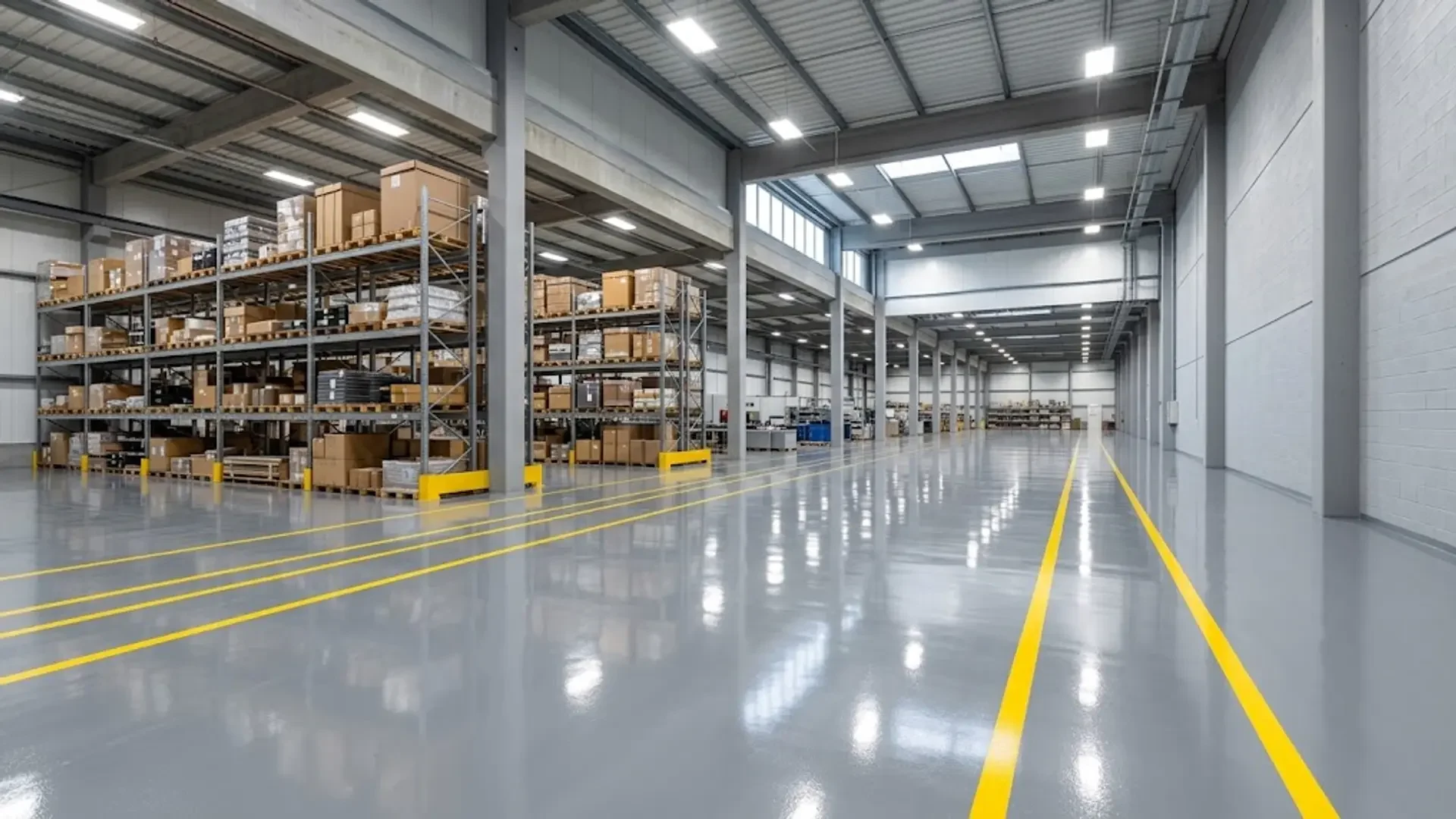
Installing a low-permeance coating or flooring system over a slab with too much moisture can lead to adhesion failure, blistering, delamination, and efflorescence. In a warehouse, manufacturing plant, commercial kitchen, food and beverage facility, healthcare building, or data center, a failed floor means downtime, sanitation concerns, and the cost of tearing out and reinstalling the system. Moisture evaluation belongs at the start of the project, before the finish system is finalized and installation is scheduled.
Atlanta's Climate Adds a Local Wrinkle
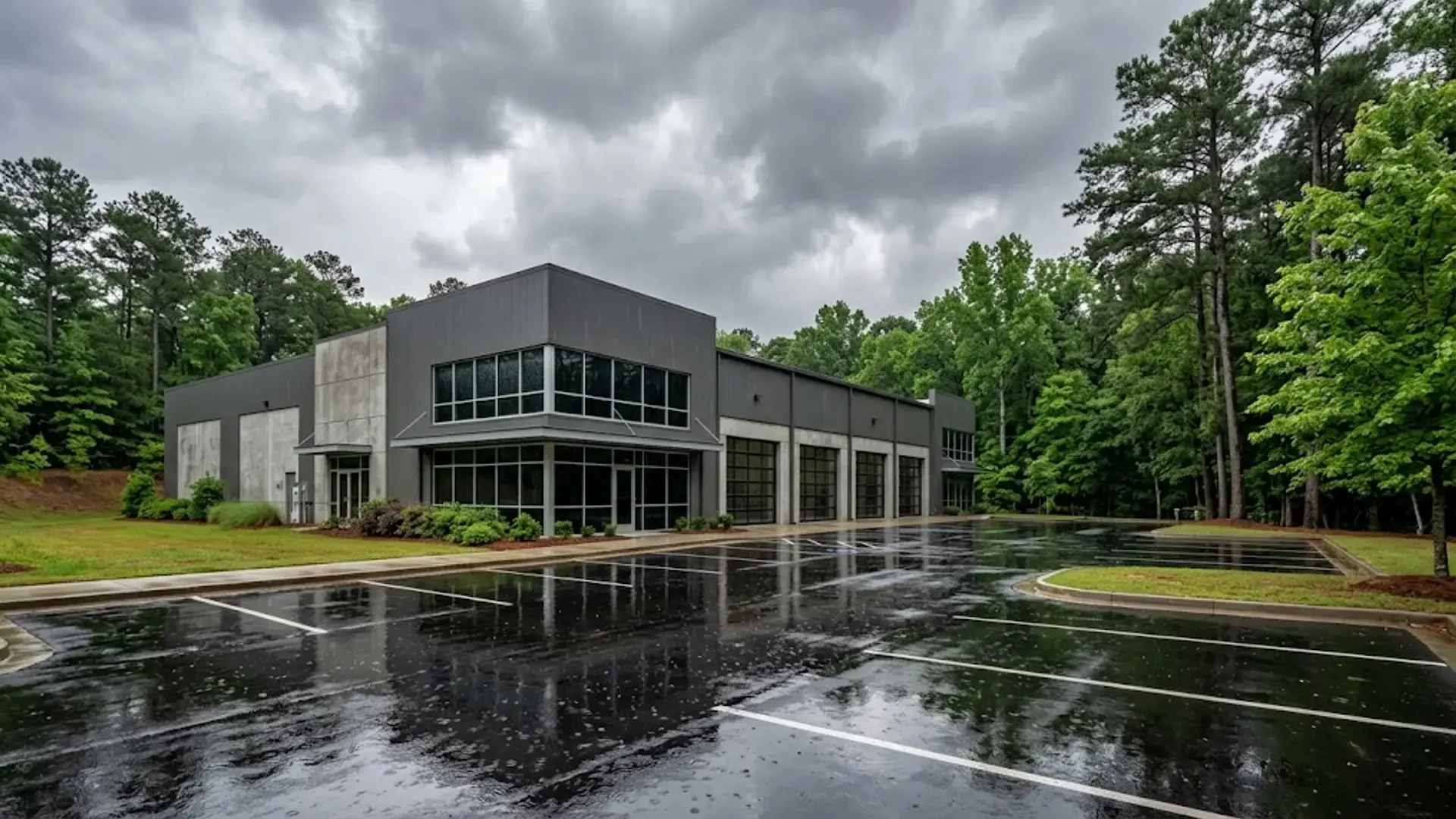
Atlanta has a humid subtropical climate, with rainfall spread fairly evenly across the year. Climate alone doesn't determine a test result, and many Atlanta slabs test within limits. A dry-looking surface says little about what's inside the concrete, so facilities across the metro area should test before they specify a floor. When results come back above a system's published limits, concrete vapor remediation can bring the slab within range. Concrete Masters installs certified mitigation systems from Koster, Mapei, and Aquafin, then retests before the finish floor goes down.
Frequently Asked Questions
What is the difference between ASTM F2170 relative-humidity testing and ASTM F1869 calcium-chloride testing?
The difference between ASTM F2170 and ASTM F1869 is where they measure moisture. F2170 measures relative humidity inside the slab using probes set at a specific depth, typically 40% of slab thickness for a slab drying from one side. F1869 measures the rate of moisture vapor leaving the concrete surface. The flooring or coating manufacturer's requirements decide which test, or both, applies.
When should a commercial facility schedule concrete moisture testing before new flooring or coatings are installed?
A commercial facility should schedule concrete moisture testing after the building reaches its expected operating temperature and humidity, with the HVAC system running normally. Testing under those conditions gives an accurate picture of the slab environment the new floor will face.
What happens if a slab's moisture test comes back too high for the chosen floor system?
If a slab's moisture test comes back too high for the chosen floor system, the facility can add a moisture vapor mitigation system or choose a finish system with a higher moisture tolerance. After mitigation, the slab should be retested to confirm it falls within the finish system's limits before installation begins.
Get Moisture Conditions Reviewed Before You Finalize a Floor System
If your facility in Atlanta, Marietta, Duluth, or anywhere across Fulton, DeKalb, Cobb, Gwinnett, or Fayette County is planning a new commercial epoxy, polyaspartic, or polished concrete floor, test your slab's moisture before the finish is specified. Concrete Masters has been serving commercial and industrial facilities throughout metro Atlanta since 2006 and is licensed, insured, and bonded. Call (404) 934-0424 to talk through your project.