
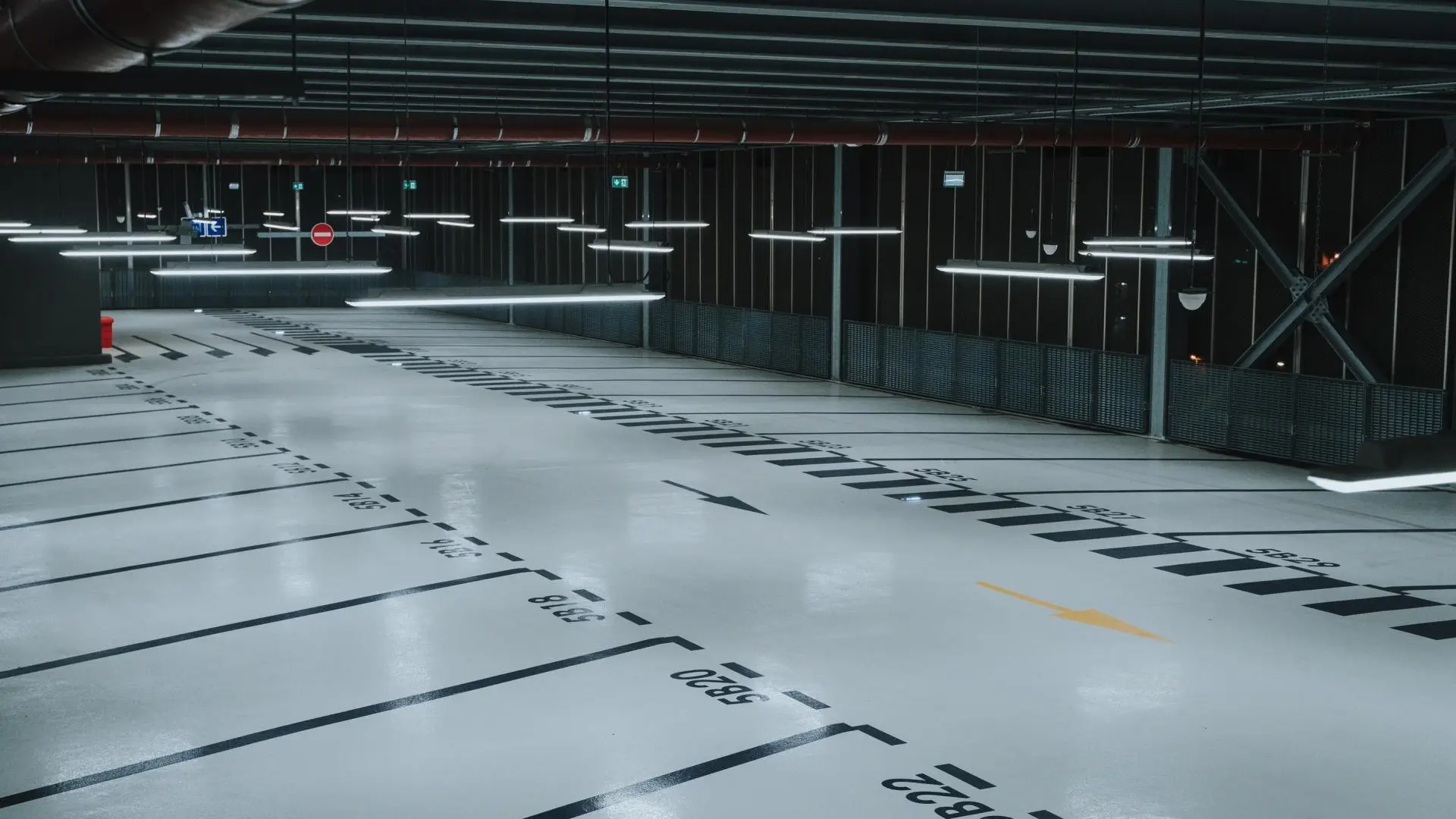
If you are planning a commercial epoxy flooring project for a warehouse, plant, or other industrial facility in the Atlanta area, the first question is almost always the same: what will this cost? Concrete Masters publishes a planning range of $3 to $12 per square foot for Atlanta commercial epoxy projects, with the final number depending on the system specified, how much concrete preparation the slab needs, and the finish selected. That range is a useful starting point for a budget allowance, not a guaranteed quote. This guide walks through what actually drives that price, why two facilities with similar square footage can receive very different bids, and what to confirm before you approve a proposal.
What the Published Price Range Actually Covers
A per-square-foot number only tells part of the story. Concrete Masters' commercial epoxy flooring installation process includes several steps that happen before any coating goes down:
- Diamond grinding or shot blasting to mechanically prepare the slab
- Moisture testing performed to ASTM F1869 and F2170 standards
- Vapor mitigation when testing shows it is needed
- Crack and joint repair
- Coating applied at a manufacturer-specified thickness
When a quote comes in lower than expected, it is worth asking whether these steps are fully included or priced as potential add-ons. A number that excludes preparation or moisture work is not describing the same scope as one that includes it, even if the square footage is identical.
Why Comparable Facilities Get Different Quotes
Two buildings with the same floor area can land at opposite ends of the published range. According to Extreme IFC, a local provider that publishes cost guidance for Atlanta commercial epoxy projects, removing existing coatings or adhesive, addressing oil contamination, and repairing damaged concrete all add preparation work that a clean, bare slab would not require. The same source notes that larger, more accessible floor areas can spread mobilization and equipment costs across more square footage, which can bring the effective rate down on bigger jobs (Extreme IFC). In other words, equal square footage does not mean equal bids. The condition of your existing slab and how easily crews and equipment can access the space both factor into the final number.
Specification Options Worth Discussing
Concrete Masters offers several resinous flooring systems for commercial and industrial facilities, including broadcast flake and quartz systems, moisture vapor barriers, polyaspartic coatings, and urethane cement and slurry systems. These are not interchangeable. Each is suited to different traffic levels, chemical exposure, and moisture conditions, which is part of why a proposal should specify the system by name rather than simply calling out "epoxy" as a generic line item.
| Scope Question | Why It Affects Your Budget |
|---|---|
| Which coating system is specified | Material and labor costs vary by system type |
| What preparation is included | Grinding, shot blasting, and repair work are labor-intensive and directly affect the quote |
| Is moisture testing and mitigation included | Mitigation work, when needed, is a separate scope item |
| What finish is selected | Finish and thickness requirements change material usage |
Moisture: A Budget Item, Not Just a Technical Detail
Excessive slab moisture can cause a coating to debond or deteriorate over time, which is why moisture testing to ASTM F2170 is part of the documented process. It is worth keeping in mind that moisture test results describe the conditions at the tested locations at the time of testing, not a permanent guarantee for the life of the floor. Manufacturer guidance from Sika also recommends keeping the substrate at least 5°F above the dew point during installation (Sika USA Surface Prep Guide). The takeaway for budgeting purposes is not that every Atlanta facility automatically needs vapor mitigation, but that moisture should be tested and addressed as part of the scope rather than assumed away. If your facility has a documented moisture history, ask how that is reflected in the proposal before you approve it.
Installation Completion Is Not the Same as Reopening
Facility managers often plan a shutdown window around when the coating is applied, but foot traffic, light traffic, and full cure are typically different milestones. As one example of how these stages can differ, Sika's product data for Sikafloor-161 lists roughly 12 hours to foot traffic, two days to light traffic, and seven days to full cure at 68°F, with those times changing based on temperature (Sika USA). This is a product-specific illustration, not a timeline commitment for every Concrete Masters installation. The practical point for your budget and operations plan is the same either way: confirm which milestone your return-to-service date is actually based on, and whether that milestone covers foot traffic, equipment traffic, or full chemical cure.
Concrete Masters also offers zone-by-zone, night, and weekend installation, which can help limit disruption to an operating facility. Project-specific scheduling and any related costs should still be confirmed for your building rather than assumed.
Building a Defensible Budget
Before approving a quote, compare the full written scope rather than the headline number alone. A useful comparison should spell out:
- The specific coating system, thickness, and finish
- What concrete preparation and repair work is included
- Whether moisture testing is included, and how mitigation is priced if it is needed
- Access restrictions and scheduling assumptions (zone-by-zone, nights, weekends)
- Which responsibilities sit with the contractor versus the facility owner, such as relocating equipment or inventory
Keep any allowance for your own operational costs, such as relocating staff or production, separate from the contractor's installation charges. Combining the two makes it harder to compare bids on an apples-to-apples basis and can obscure where the real cost differences are coming from.
If your facility has existing coating, suspected slab moisture, or known damage, it is worth reviewing concrete vapor remediation as part of the conversation, or asking whether concrete polishing is a better fit for your traffic and maintenance needs before finalizing a specification.
Get a Scope-Based Estimate for Your Facility
A published price range is a planning tool. The right number for your building depends on your slab condition, the system that fits your facility, and your access needs. Concrete Masters serves commercial and industrial facilities throughout Atlanta, GA and the surrounding Fulton, DeKalb, Cobb, Gwinnett, and Fayette County areas. To get a written, scope-based proposal for your facility, call (404) 934-0424.